A Mac and a good idea is now enough to push AI forward.
The giant training runs still belong to the giant labs. But the models people actually download, install and run are increasingly made by individuals and tiny teams — on laptops, with good ideas, and with the help of the models themselves. One person's repack has more downloads than most funded startups' models. A small team took a 27B model down to 7 GB and made it run at 26 tok/s on an Apple laptop — and I opened the weights to prove they weren't bluffing. This is a tour of that movement, with the real numbers.
The barrier fell, and almost nobody noticed
Two years ago, "working on AI models" meant a datacenter. Today the most-run open models on Earth were not trained by the people who made them runnable — and the people who made them runnable are, in several cases, one person with a laptop.
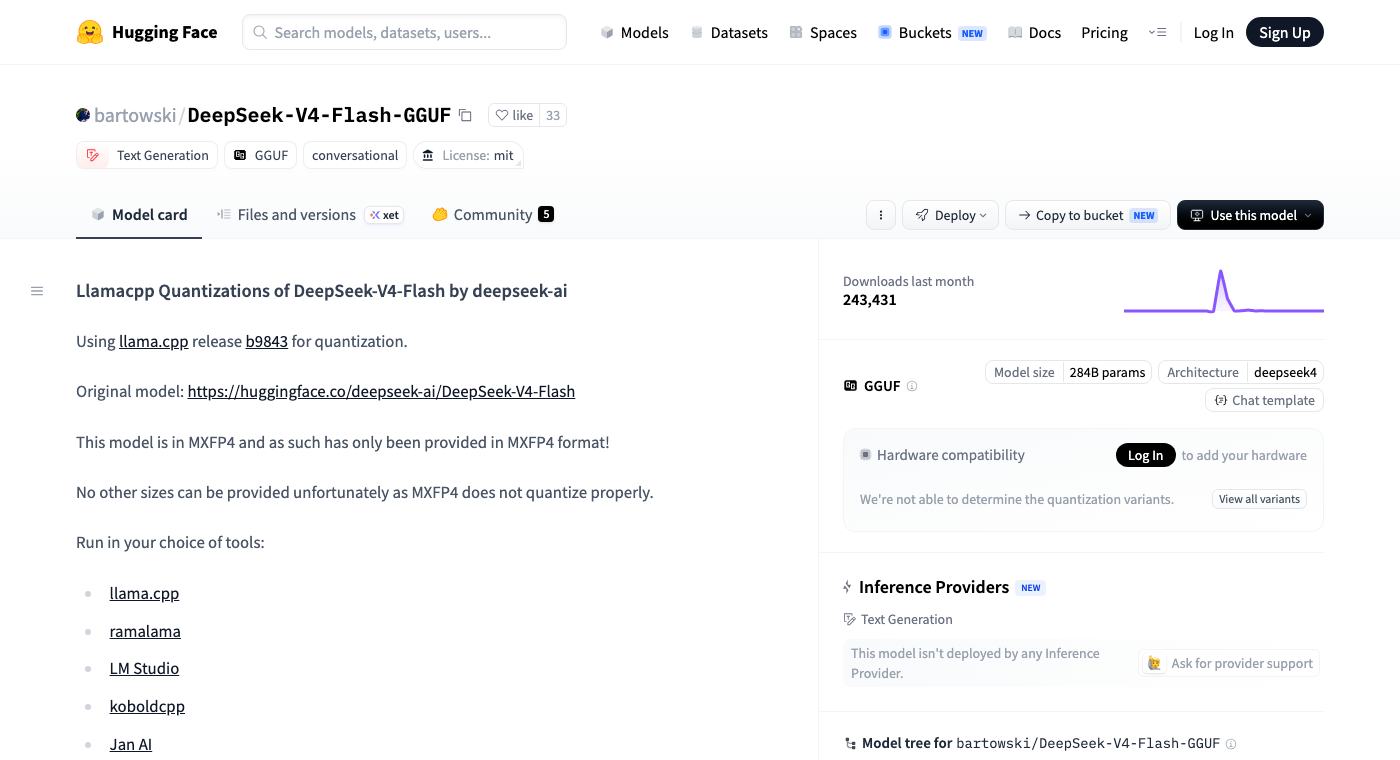
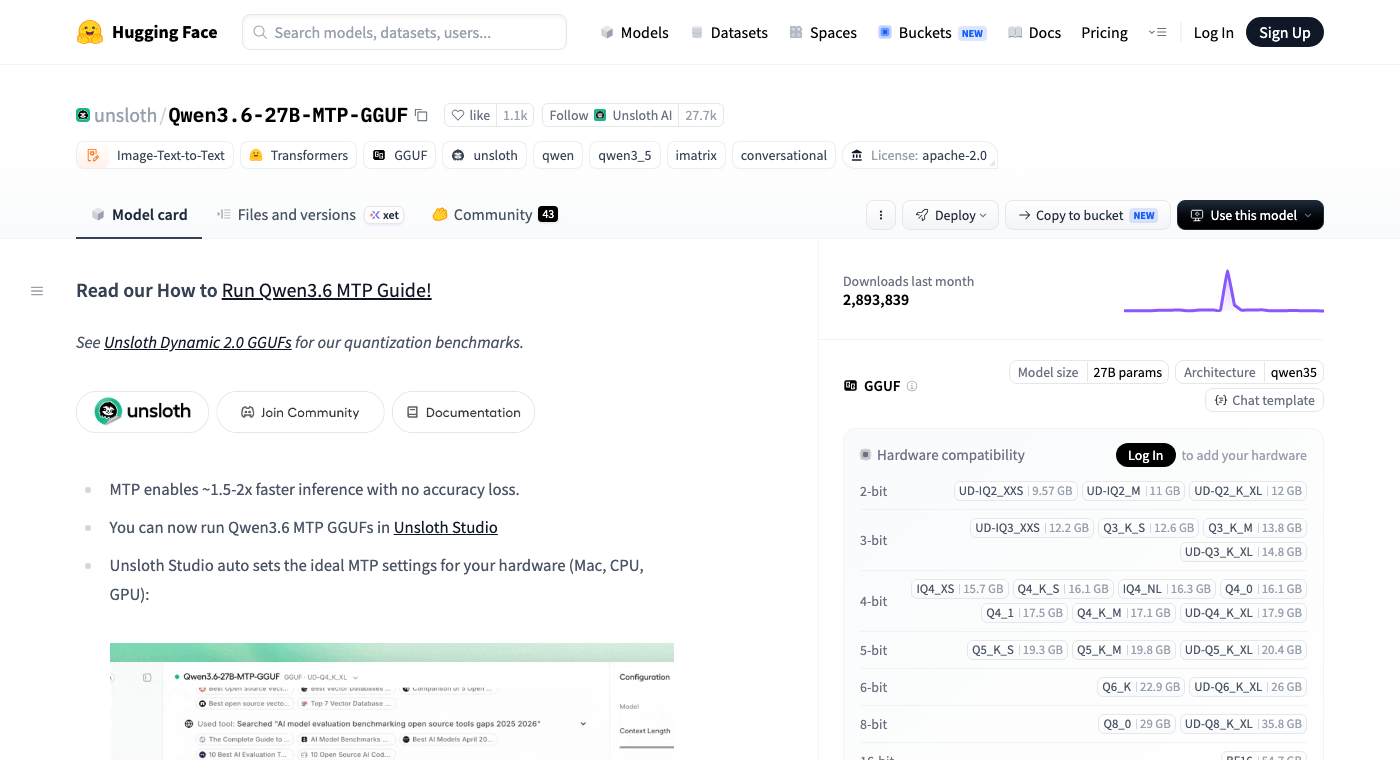
Look at who's actually shipping what people download:
None of them trained a weight. What they did is arguably harder to appreciate and just as valuable: they took models that only ran on rented GPUs and made them run on the machine you already own. That is not "just repacking." Deciding which bits to keep, which technique to apply, and proving the result still works — that's engineering, and it's where a huge amount of real progress now happens.
The Apple-Silicon story: a 27B on your laptop
The clearest example of "a Mac and a good idea" is Prism ML. Their very first release, on 29 March 2026, wasn't a paper or a GPU cluster. It was this:
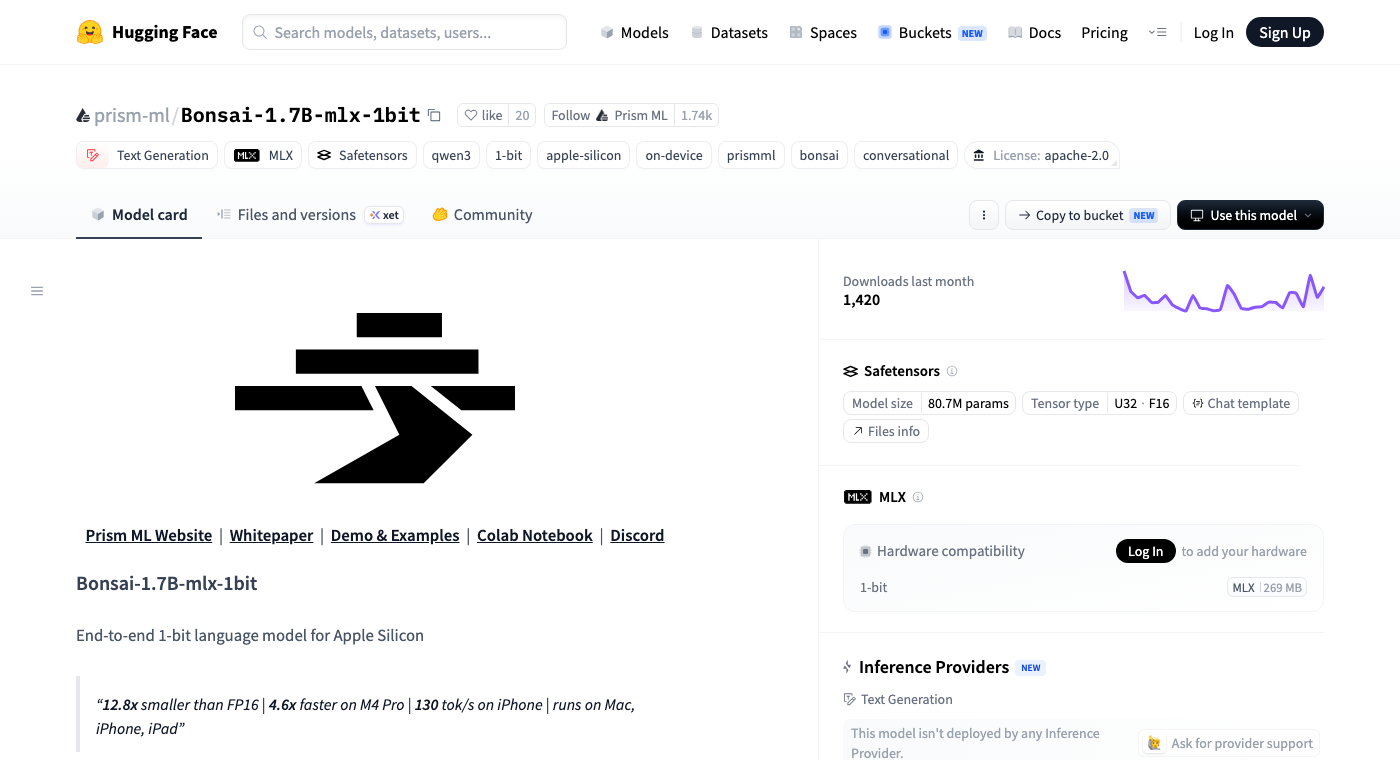
Apple Silicon wasn't an afterthought port. It was the starting platform: MLX first, the GGUF version came three weeks later. And then they scaled — fast:
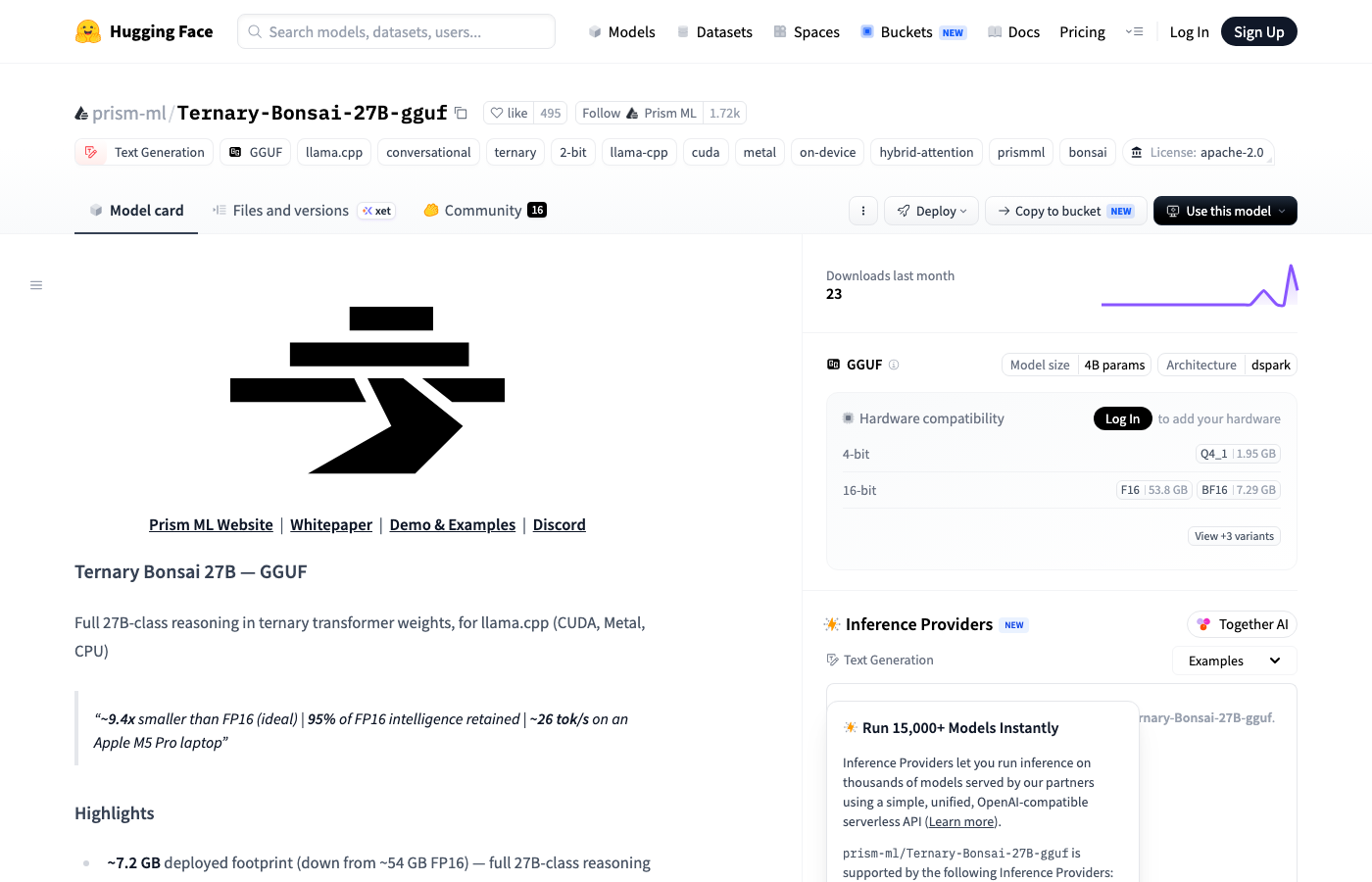
1.7B in March. 27B by July. Four months, and the ideas got bigger with the models. The flagship today: Ternary Bonsai 27B — every weight rewritten as -1, 0 or +1 at 1.71 bits, 54 GB collapsed to 7.2 GB, running at ~26 tok/s on an Apple M5 Pro laptop.
I checked whether it was real — from the weights
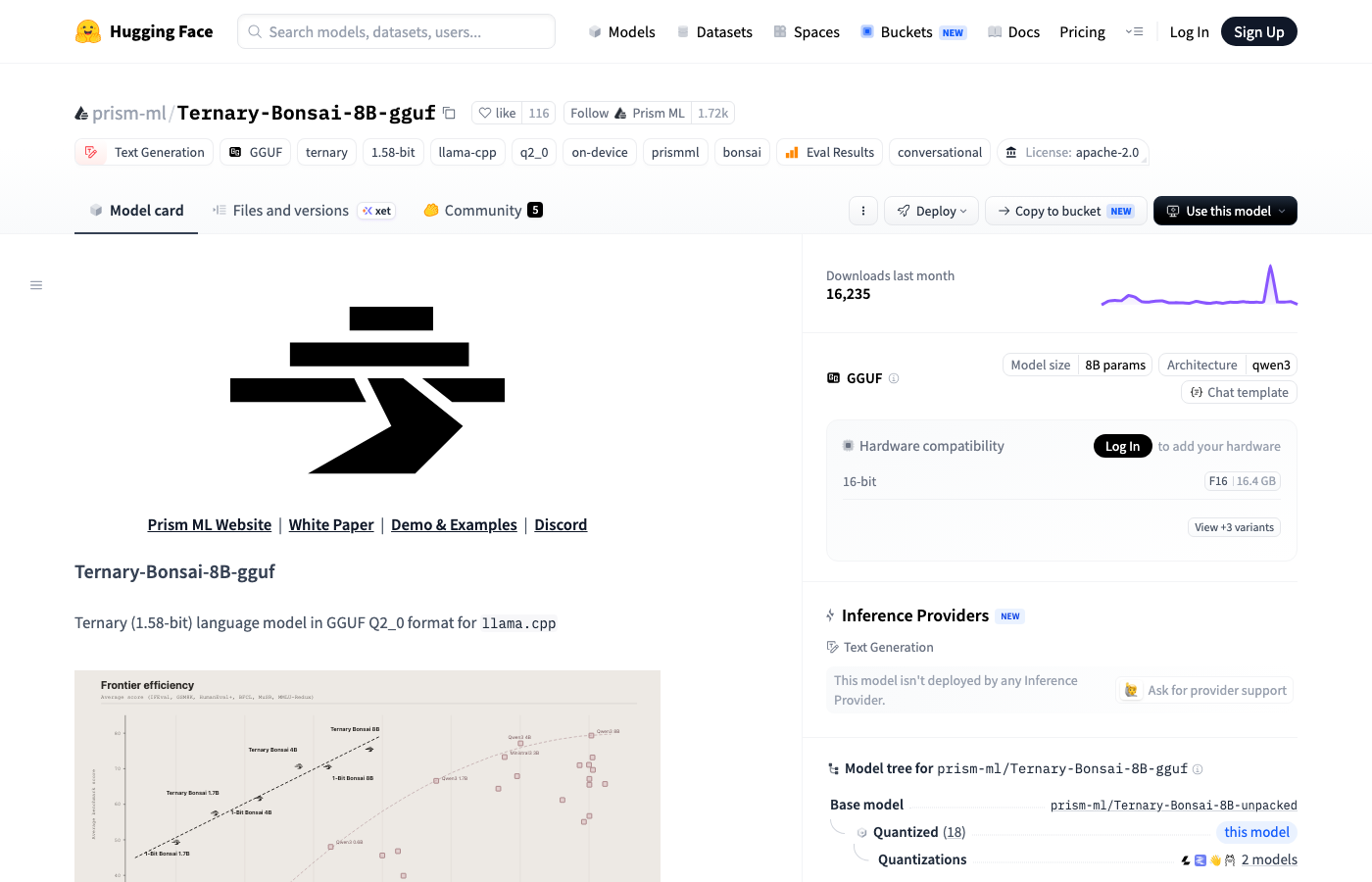
"End-to-end ternary weights" is easy to claim and boring to verify, so almost nobody does. I downloaded the 54 GB unpacked original and looked at the actual numbers. And I nearly got it wrong: my first test found 509 distinct values in a single projection and I almost concluded "not ternary."
My test was the problem, not the model. Ternary weights carry a per-group scale — {-s, 0, +s} — so with hundreds of groups per tensor you see hundreds of values globally. Their format is literally named Q2_0_g128: group size 128. You have to look inside the group.
2,560 of 2,560 groups (100.0%) contain exactly one magnitude — exactly
{-s, 0, +s}.The ternary claim is real. This is genuine engineering, and they earned the credit.
The check that "fails" is the one you have to check hardest. A badly-framed test would have let me call a legitimate piece of work a fraud — the opposite of what this movement deserves.
What these people actually invented
It would be lazy to call this "just quantization." Each of these is a genuine technical idea, shipped by a small group, that made large models usable:
- Ternary at 27B scale that keeps 94.6% (Prism ML) — 80.49 vs the FP16 parent's 85.07 across 15 benchmarks. Getting a trillion-value model down to three values without it falling apart is not trivial.
- Dynamic, per-tensor bit allocation (Unsloth's "UD" quants) — keep the parts that hurt most under compression high, push the bulk low. Their top GGUF sits at 2.89 million downloads.
- The importance matrix — let the model tell you which of its own weights matter, by watching its activations. Community-built, now everywhere.
- Expert pruning + heal — cut a Mixture-of-Experts down and re-teach the survivor. We did this ourselves on a 230B model and it worked, held-out.
The part that makes it move: AI helping AI — with a human at the wheel
Here's the quiet engine under all of it. Every technique above uses the model itself as part of the signal. The imatrix reads the model's own activations. Quantization-aware training uses the full-precision parent to supervise its compressed child. DeepSeek even ships a speculative drafter "trained against the low-bit target" — the compressed model trains its own accelerator.
So yes, AI is helping AI get better, faster, smaller. But read the loop carefully and you see where the leverage actually is: the model can supply the weights and the supervision, but it cannot supply the idea. Which technique to reach for. Where to spend the bits. How to heal the damage. What to measure, and whether to believe the number. Those are decisions — and every one of them, in this movement, was made by a person.
That's the honest shape of it: great minds, amplified by AI, running on hardware anyone can buy. The model is the most powerful assistant a builder ever had. It is not the builder.
You can actually join this
The barrier to contributing is now absurdly low. In the course of writing this, with a laptop and some stubbornness, I:
- Verified a ternary claim straight from the weights (the 2,560/2,560 above) — something the card asserted but nobody had checked publicly.
- Hit a real bug: llama.cpp couldn't quantize DeepSeek-V4 because its routing table is an integer index it tried to treat as weights. I traced it, wrote a one-line fix, and reported it upstream (issue #25754). A tiny contribution — but it's the kind of thing that used to require being inside a lab, and now requires a Mac and an afternoon.
None of that needed a GPU cluster. It needed curiosity and the discipline to measure instead of assume.
The honest edges
This isn't a fairy tale, and pretending otherwise would insult the people doing the work:
- The labs still do the irreplaceable part. Every model above is derived from a base that a well-funded team trained. The frontier of raw capability is still theirs.
- You still pay for the compression. 94.6% is also 100% of the missing 5.4%, and nobody publishes which 5% they lost.
- Some of it needs custom tooling. Bonsai needs Prism ML's own llama.cpp fork for its low-bit kernels. A model you can't run with the tools you have is a demo, not yet a dependency — though 18k people clearly installed the fork anyway.
- Fidelity isn't capability. Measuring that a compressed model faithfully copies its parent says nothing about whether the parent was good at your task. Keep a real, fast capability test next to your compression metrics.
The takeaway
The frontier of capability is still trained in datacenters. But the frontier of usability — making these models run on the machine you own, and inventing the techniques that get them there — is wide open, and it's being pushed forward by individuals and small teams with good ideas.
You don't need permission, and you don't need a cluster. You need a Mac, a good idea, the humility to measure, and a model to help you. That combination is now genuinely enough to move AI forward.
Every download count in this post was read from the HuggingFace API on 16 jul 2026 and screenshotted from the live pages; counts update on a delay, so treat them as "as of today." The ternary verification and the llama.cpp bug are my own work. Credit for the models belongs entirely to the teams named — this post is a thank-you as much as an analysis.